
Welcome to snowboarding. This course walks you through a normal progression: flat ground, bunny hill, green slopes, then blues, and before long you're linking turns down the mountain and hitting your first jumps. You don't need to be athletic or fearless. Warm clothes, a bit of patience, and a willingness to fall over and laugh about it will get you most of the way there.
Everybody falls on day one. That doesn't mean you're bad at it, it means you're doing it. The riders carving past you were in the exact same spot not long ago. Focus on small wins. Your first successful heelside stop, your first full heel-to-toe turn, your first whole run without falling. The rest builds from there.
What you need
- A warm, waterproof jacket and pants. You will spend a lot of time sitting in the snow. Cotton is miserable when wet; wear synthetic or wool layers underneath.
- Gloves or mittens, goggles, and a helmet. Wear a helmet. Beginners catch edges and hit the back of their head, so this isn't optional. Rent one if you don't own one.
- A snowboard, boots, and bindings. Rent them for your first few times. The rental shop will size your board (usually chin-to-nose height) and set up your bindings.
- Wrist guards, if you have them. Wrists are the most commonly broken bone in beginner snowboarding. Guards are cheap insurance.
Safety basics
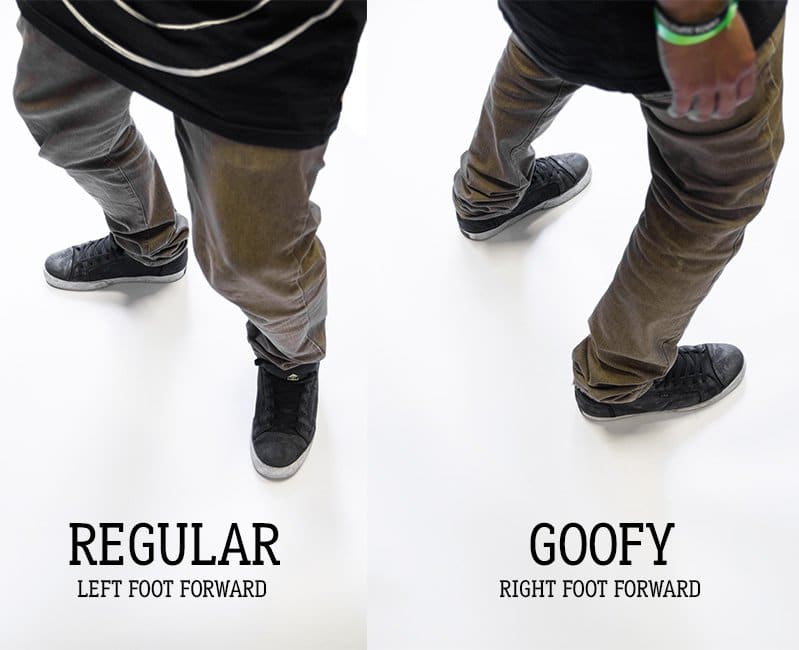
Know your stance. Regular means left foot forward, goofy means right foot forward. Easy test: have someone gently push you from behind, and whichever foot you catch yourself with is your back foot.
Source: www.snowboardingdays.com

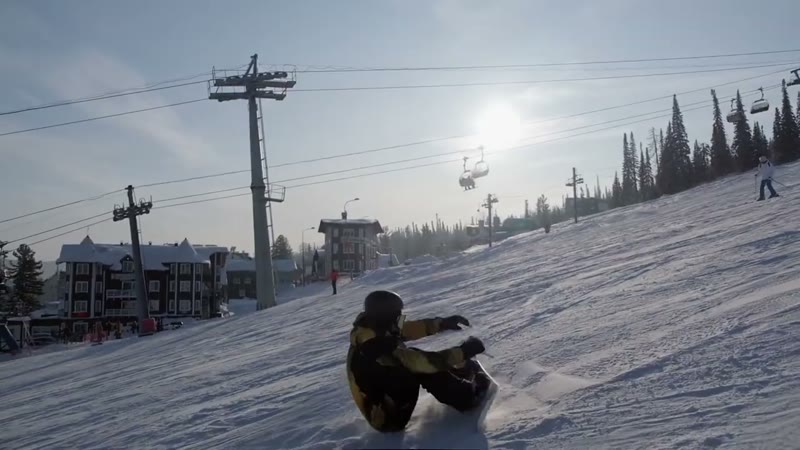
Fall smart. On heelside, try to sit down rather than reach back with your hands (broken wrists come from catching yourself).
Source: Alexey Sobolev · The best way to fall on a snowboard | How to Fall on a Snowboard
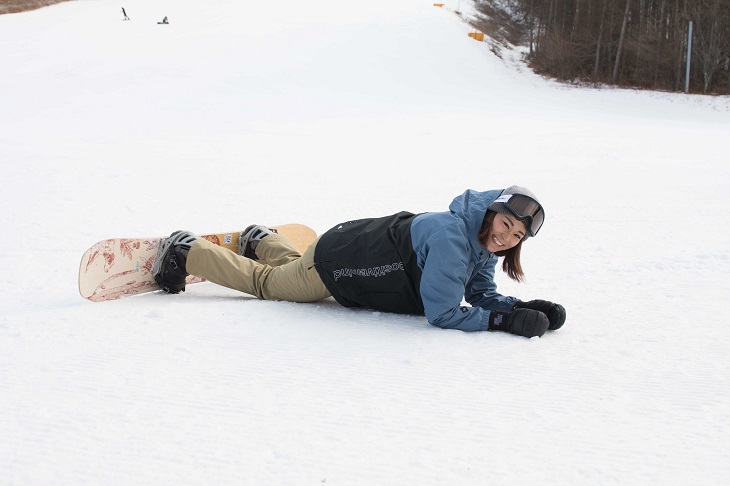
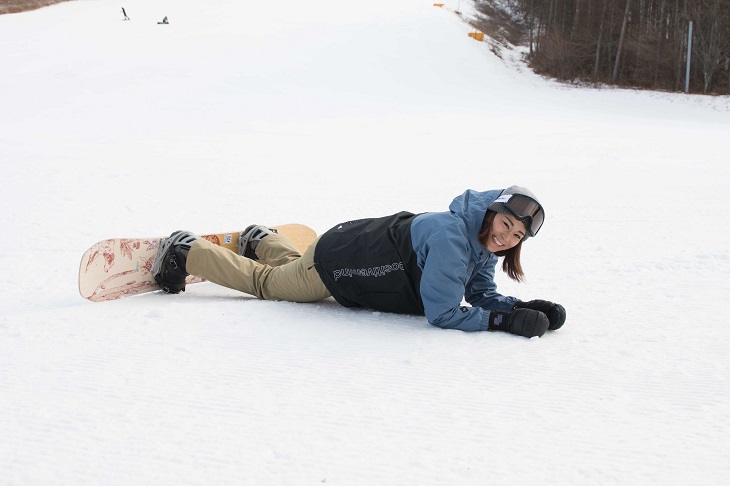
On toeside, go to your knees and forearms, not your palms.
Source: japan-skiguide.com
- Look where you want to go. Your board follows your eyes and shoulders. Staring at the tree you're scared of is the fastest way to hit it.
- Follow the responsibility code. People ahead of you have the right of way. Don't stop in the middle of a run or below a blind rise. Check uphill before merging.
- Start small and go in order. The bunny slope exists for a reason. Moving to a steeper run before you can stop reliably is how beginners get hurt.
Snowboarding tends to click suddenly rather than gradually. You struggle for a while, then one run it just works.
Have fun out there. See you on the mountain.
This course is your foundation
This course covers the core skills that make snowboarding feel controlled, safe, and fun. It won't cover every situation you might run into on a mountain or every style of riding.
Some riders love carving groomers. Others head straight for the park, powder, or side hits. You don't need all of that to enjoy snowboarding. You just need the basics dialled in.
Use this course as your starting point. Once you're comfortable linking turns and controlling your speed, you can take your riding in whatever direction feels the most fun to you.
Key tips
- Wear a helmet and consider wrist guards. Your first day has the most falls
- Figure out your stance (regular or goofy) before you strap in
- Expect to fall a lot on day one. It gets dramatically better on day two
- Look where you want to go, not at what you're afraid of
- Stay on the bunny slope and green runs until stopping feels automatic
- Hydrate and take breaks. Fatigue is when injuries happen