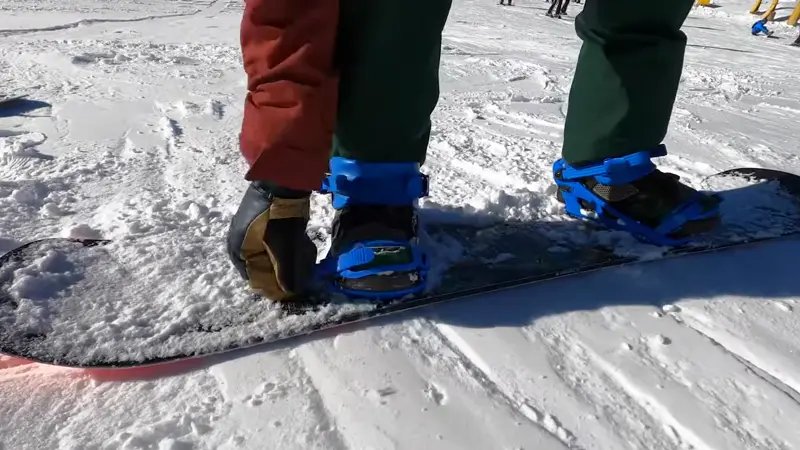
Strapping into your snowboard means securing your boots into the bindings. You'll do this every time you get off a lift or stop for a break, so getting it right and doing it quickly is key to a smooth day on the mountain.
This article assumes you have classical bindings with straps.
If you're on a slope, flip your board upside down while waiting to prevent it from sliding away. It can easily go down without you, so be careful if you are on a slope. When ready, flip it over, securing it with your front hand on the highback. Scrape any snow off your boot and out of the binding.
Kick your front foot firmly into the binding heel cup. Fasten the ankle strap first, cranking it down until it's snug but not painful. Then, position the toe strap over the seam of your boot's toe box and tighten it securely. Repeat for your back foot.
Give both straps a final crank to ensure they're tight but not uncomfortable. Your boot should feel like an extension of the board, with no wiggle room.
For the other foot, you can strap in sitting down (recommended for beginners) or standing up on a flat spot or by digging your heel edge into the snow.
Common mistakes
- Loose straps: If your straps aren't tight enough, your boot will move around, making it hard to control your board. You'll feel sloppy and disconnected.
- Floating toe strap: The toe strap should sit firmly over the toe of your boot, not ride up towards your ankle. Make sure it's cranked down over the toe box.
Watch more here:
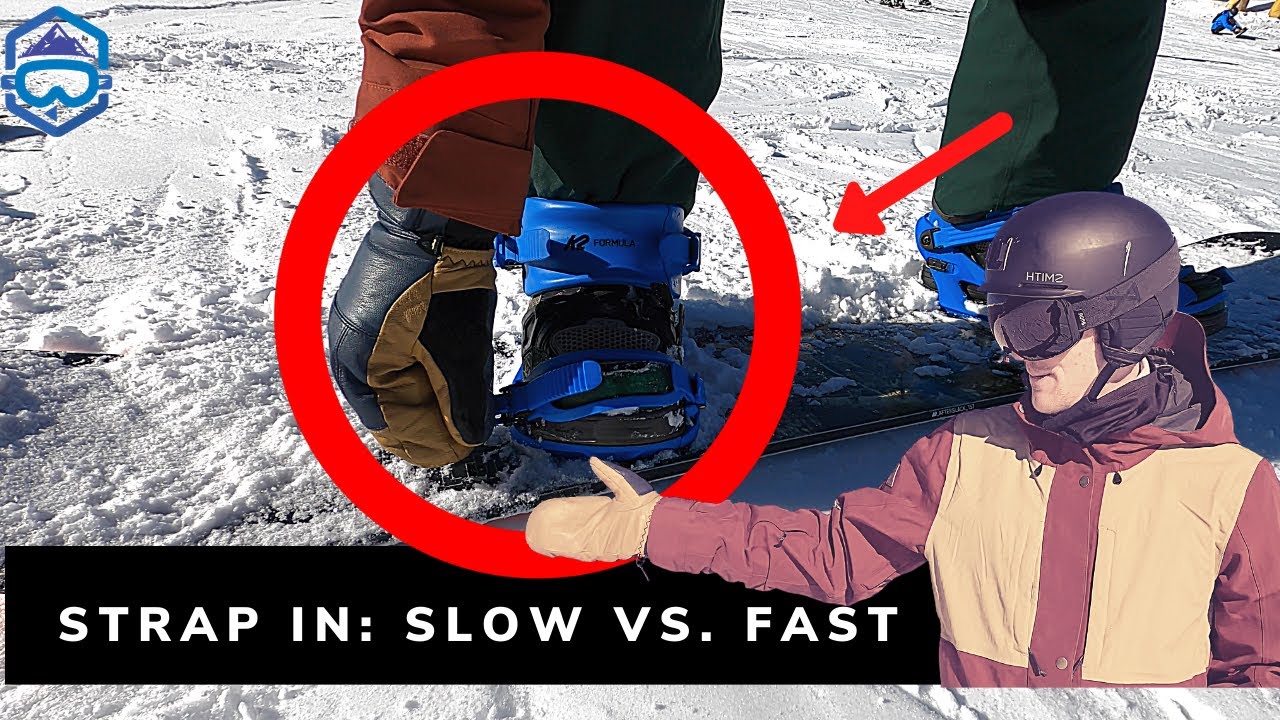
Video by Ed Shreds