You don't need gear to start. Most of this course can be done with a floor, a wall, a sturdy chair and a table. Before buying anything, check your local gym - nearly all of them have a free bodyweight area with a pull-up bar, dip station and rings, so you can try things before committing.
If you do want to get serious, here is what helps, roughly in the order you'll want it.
Chairs and tables
Free, and already at home. Two chairs give you dips, knee and leg raises, step-ups and rows. A table edge gives you rows and elevated push-ups. Make sure they're stable and won't tip.
Push-up handles and parallettes
Handles are small enough for a backpack and take pressure off your wrists - use them in any exercise you'd normally do with flat hands on the floor. They also let you go a bit deeper than the ground.
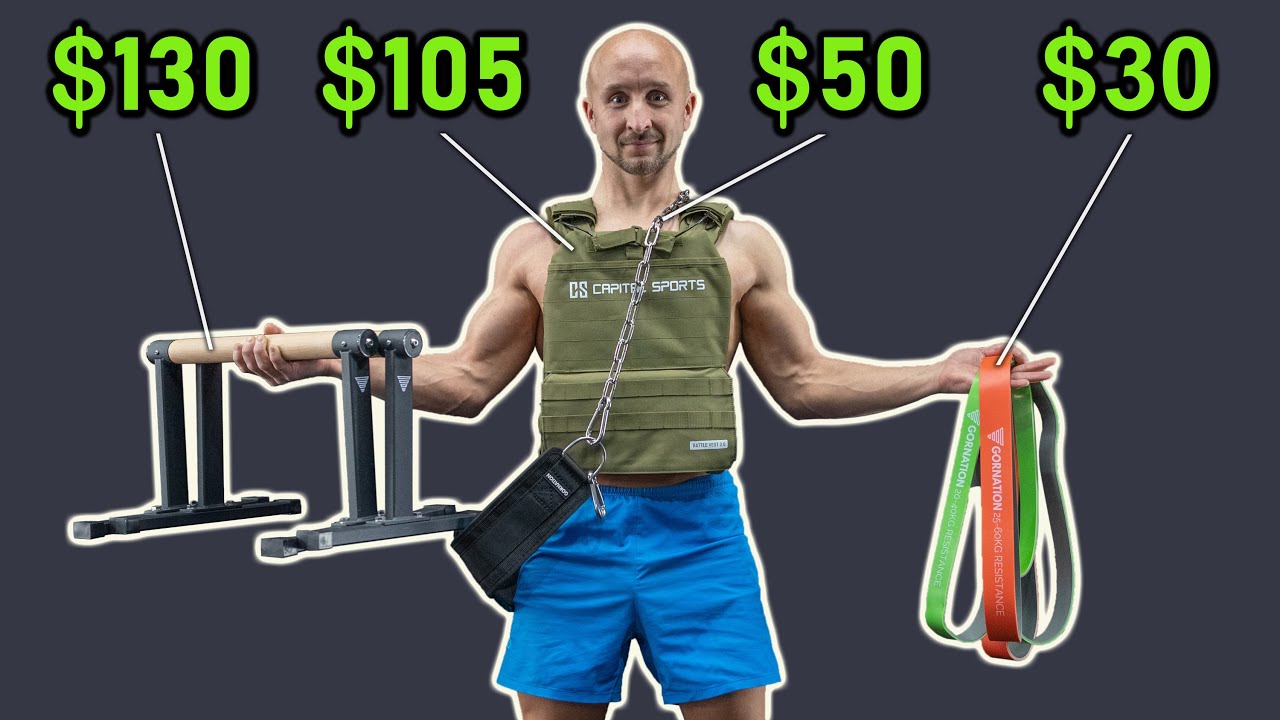
Parallettes are longer and higher (25-35 cm is a good height). The extra height opens up L-sits, elbow levers, full range handstand push-ups and transitions between support and overhead positions. Downside: less portable, and kicking up into a handstand is harder. Wooden handles are nicer to grip.
High parallettes
Same idea, around 70-80 cm tall - high enough to extend your arms at the bottom of a row without touching the floor. Add dips, rows, leg raises and front-lever work. They need more space, and handstand work on them is riskier - learn to bail safely on low parallettes first.
Doorframe pull-up bar
The cheapest way to get real pull-ups, hanging leg raises, skin the cats and everything else that happens hanging. Pick a doorframe model over a telescopic one - they're safer and can go at full height.
Rings
The best single upper-body tool. Your joints move freely instead of being locked into a bar, and some exercises only work properly on rings: chest flies, roll-outs, archer and uneven variations, muscle-ups. Cheap, fits in a bag, hangs from beams and trees.
The catch: the instability makes support exercises much harder, so learn the basics on bars or the floor first. Look for wooden rings around 2.8-3.2 cm thick, with numbered straps and solid buckles.
Resistance bands
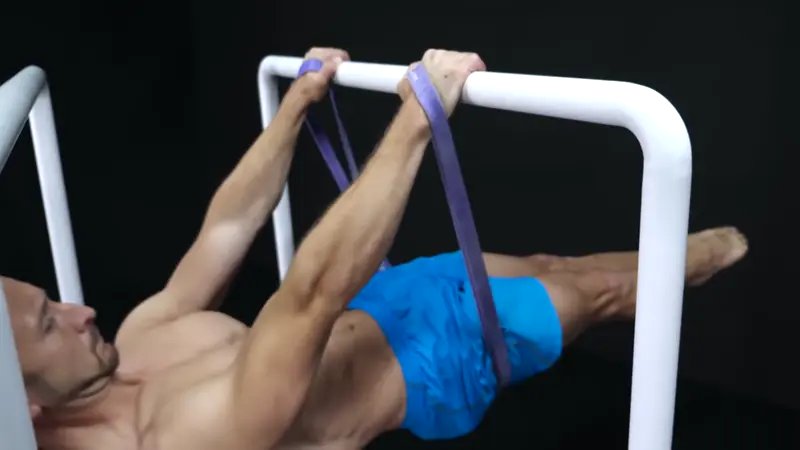
Bands make hard things easier (skill work, band-assisted dips) or easy things harder (banded push-ups). One thing to know: for dips the band helps most at the bottom, which is where you need it. For pull-ups it's the opposite - most help at the bottom, least at the top - so combine banded pull-ups with negatives. Thicker band, more resistance; roughly 5-60 kg depending on the band.
Weight vest or dip belt
Not strictly calisthenics, but a simple way to make basic movements heavier once archer variations stop being enough. A vest suits push-ups and legs; a belt is easier to adjust and better for pull-ups and dips. Look for padded shoulder straps and a snug fit on a vest, and a solid chain and carabiners on a belt. No budget? A backpack full of books does the job.
If you buy one thing
Get rings. They're cheap and give you the most exercises per euro. On a slightly bigger budget, a doorframe pull-up bar plus high parallettes covers both pull and push.
Learn more here:
Video by Calisthenics Movement