
The frog stand is one of the first balance skills you'll encounter in calisthenics - and one of the best gateway moves toward harder things like the planche or handstand. Despite how impressive it looks, it's almost entirely technique. Strength matters very little. If you're struggling, it's almost always a form problem, not a fitness problem.
Prerequisites
The frog stand requires minimal strength, but you should be comfortable with:
- Basic wrist and shoulder mobility
- A solid plank - you need to know how to create full-body tension
How to do it
Squat down and place your hands flat on the floor, shoulder-width apart, fingers spread. Bend your elbows to about 90 degrees and rest your inner knees against your triceps - just above the elbow. Lean forward until your feet lift off the ground. From the top:
- Hands: flat on the floor, fingers spread wide for stability
- Elbows: bent, acting as a shelf for your knees
- Knees: pressed firmly into your arms - and your arms pressing back equally
- Lean: enough forward that your center of mass is over your hands, but not so much that you strain your wrists
- Breathing: steady; don't hold your breath
The key to balance is that bilateral press - knees into arms, arms into knees. If either side goes slack, you'll wobble immediately.
Progressions
- Fingertip frog - practice balancing on fingertips rather than flat palms to build wrist strength
- Basic frog stand - flat palms, knees resting on triceps, short holds of 5–10 seconds
- Straight-arm frog stand - arms fully locked out; a significant jump in difficulty that bridges to the planche
- Tuck planche - from the frog, shift weight further forward until the knees lift off your arms
If your goal is the planche, prioritise the straight-arm version and lean as far forward as you can handle. If your goal is transitioning into a handstand, focus on getting your hips as high as possible instead.
Learn more here:
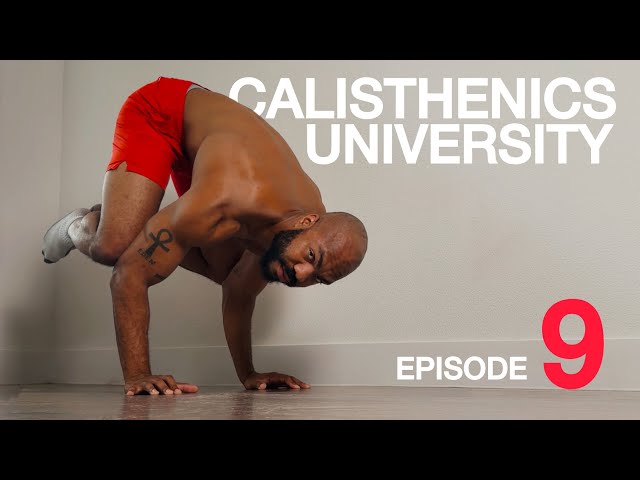
Video by STRIQfit
Key tips
- Lean forward enough. The most common mistake is not leaning enough. You need your center of gravity over your hands - without that lean, your feet won't lift
- Press knees and arms together. This single cue will fix most balance problems instantly
- Warm up your wrists. Rotate them, flex them, extend them - this is a loaded wrist position and cold wrists will fight you
- Keep breathing. It's easy to brace everything and forget to breathe. Stay calm and let the balance happen
- Don't stall on what you can hold. Once you can hold for 10–15 seconds, move to a harder variation - progress doesn't come from holding longer, it comes from making it harder