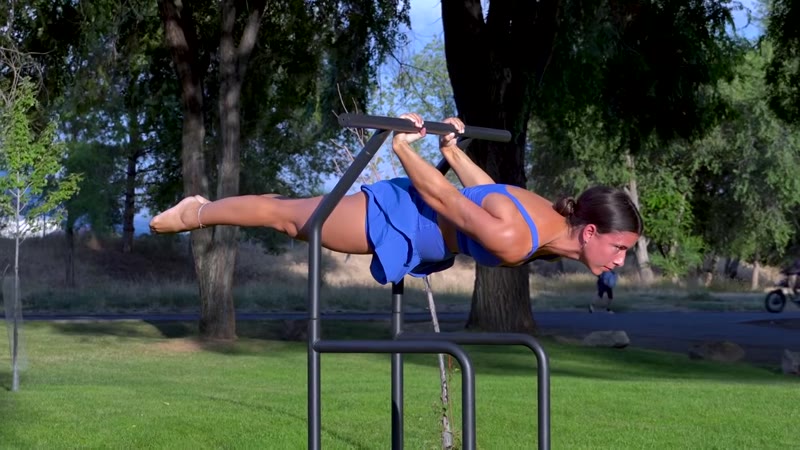
The back lever is a genuine full-body skill. Your lats and straight arms hold you horizontal, while your glutes, quads and core fight to keep you in one rigid line. That's the same tension you'll need for the front lever, so time spent here carries straight over. The catch is loaded shoulder extension - a vulnerable position for the shoulders - so build the prerequisites first and never push into pain.
Prerequisites
You're ready to start training the full back lever when all of these feel easy:
- Comfortable skin the cats through a full range of motion
- A 10-second German hang held for multiple sets, pain-free at the elbows
- 10+ pull-ups and a solid row
- A few full dragon flags, trained with a tight hollow body
- Mobile wrists and forearms, plus shoulder stretches that mimic the back lever position
How to do it
Overgrip the bar with your palms facing away from you, hands narrow - a narrow grip makes the hold easier, and you can widen it as you get stronger. From the top down:
- Elbows: bent quite a bit, to make space for your hips to pass through
- Legs: extended and squeezed tightly together
- Core: locked into a hollow body - feel it in the front of your core, never in your lower back
- Shoulders: lower through them as you push the bar away, keeping your hips in line with your hands
- Gaze: lift it as you descend, squeezing your arms into your body the whole way
What you don't want is to arch your back and just lift your arms - that dumps you into a German hang, not a back lever.
Progressions
Lower only to a position you can hold while still breathing calmly - it doesn't have to be parallel yet. Build hold time, then lower a little further each session.
- Tuck back lever - knees tucked to shorten the lever. Work on lowering more and more until you reach parallel, then move on
- Vertical back lever - legs straight but held above parallel. Lower to a range you can hold for at least 5 seconds
- Lowering to parallel - over time, drop that straight-leg hold lower and lower until you're flat at parallel
- Full back lever - a clean, straight-body parallel hold, widening your grip as it gets easier
You don't have to take the vertical-lowering route. If you'd rather do static holds of an easier progression at parallel, that works too - just make sure you're accumulating enough total hold time to keep progressing.
See more here:
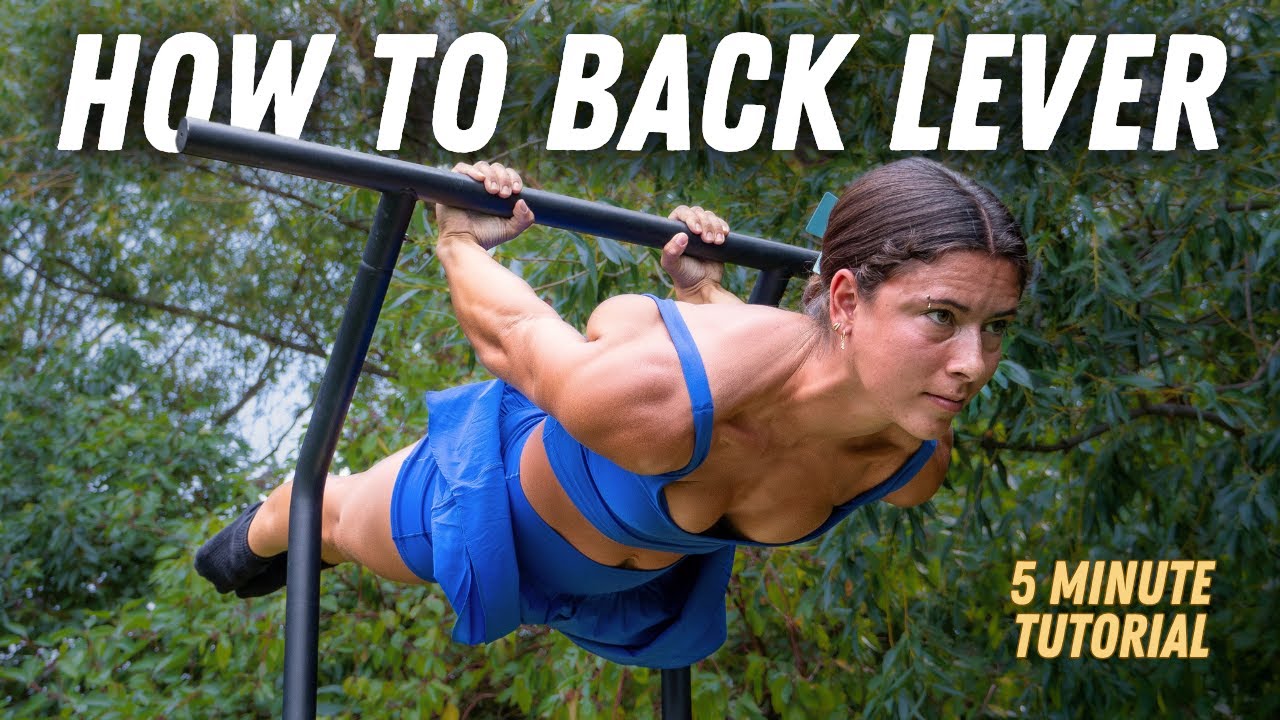
Video by Summerfunfitness
Key tips
- Meet every prerequisite first - strength at these makes the back lever itself mostly technique
- Use a narrow pronated grip to start; widen it only as the hold gets easy
- Bend the elbows to clear your hips, and keep the bar in line with your hips as you lower
- Hollow body, not arched back - if you're arching and lifting the arms, you're in a German hang
- Lower only to a range you can hold for 5 seconds while breathing; range comes with time