
Side Stepping and Herringbone
Introduction
When learning to ski, you will sometimes need to move uphill without taking your skis off. Side stepping and herringbone are two simple techniques that help you move up a slope safely.
Both techniques are important because they allow you to move around the mountain, get back onto your feet after a fall, and reach areas where you want to practise.
Side Stepping
Side stepping is used to move sideways up a hill. It is one of the easiest ways for beginners to climb a gentle slope.
How to Side Step
- Stand across the slope: Turn your body and skis sideways so that your skis are pointing across the hill, not downhill.
- Keep your skis parallel: Place one ski next to the other.
- Use your edges: Press the uphill edges of your skis into the snow to prevent sliding downhill.
- Take a small step: Lift your uphill ski slightly and place it a little higher on the slope.
- Bring the other ski up: Move your second ski next to the first one.
- Repeat: Continue taking small steps until you reach the desired spot.
Source: SkiTipsApps · ST1 21 Side Step Climb
Important Tips
- Keep your skis parallel throughout the movement.
- Take small, controlled steps.
- Keep your knees slightly bent.
- Keep your body facing across the slope.
- Make sure your skis stay on their edges so they don't slide downhill.
- Keep at least 3 point of contact with the snow. (2 poles one skis or two ski 1 pole)
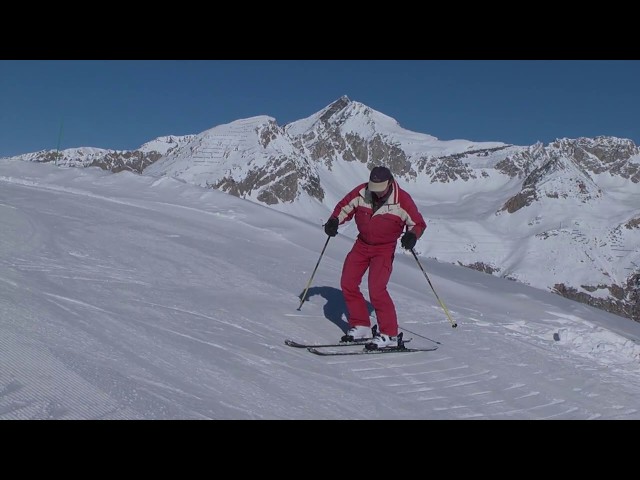
Source: SkiTipsApps · ST1 21 Side Step Climb
Herringbone
The herringbone technique is used to walk uphill when the slope is too steep to climb with normal walking or side stepping.
Your skis form a V shape, with the tips pointing outward and the tails closer together. This position helps the edges of your skis grip the snow and prevents you from sliding backward.
How to Herringbone
- Point your ski tips outward: Open your skis into a wide V shape. (Reverse wedge)
- Keep your tails closer together: Your skis should look like a bird's footprint.
- Press on your inside edges: This helps your skis grip the snow.
- Take a small step uphill: Lift one ski and place it slightly higher on the slope.
- Move the other ski: Bring the second ski forward while maintaining the V shape.
- Continue walking: Repeat these small steps until you reach the top.
Source: SkiTipsApps · ST1 22 Herringbone
Important Tips
- Keep your ski tips pointing outward.
- Maintain a wide enough V shape to avoid sliding backward.
- Keep your knees slightly bent inward.
- Take small steps rather than trying to walk too quickly.
- Keep your weight balanced between both skis.
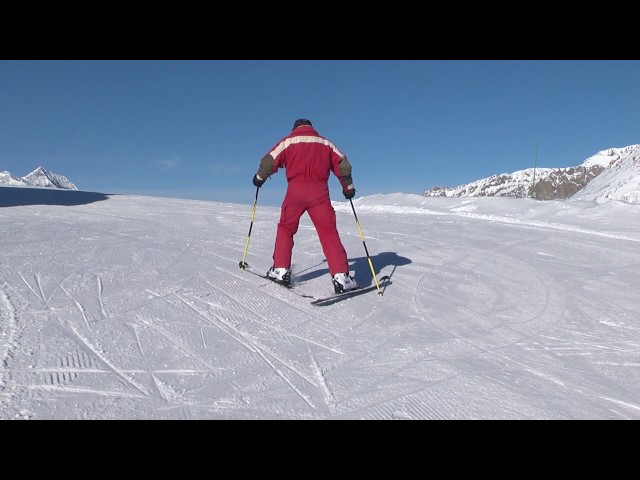
Source: SkiTipsApps · ST1 22 Herringbone
What Is the Difference?
Both techniques help you move uphill, but they are used in different situations.
- Side stepping: Used to move sideways up a steeper slope while keeping your skis parallel.
- Herringbone: Used to walk directly uphill on a gentle slope with your skis in a V shape.
Practice Exercises
Find a gentle slope with plenty of space and practise the following exercises:
- Side stepping: Practise moving a few steps uphill while keeping your skis parallel.
- Changing direction: Practise side stepping in both directions.
- Herringbone: Practise walking uphill with your ski tips pointing outward.
- Controlling your balance: Try to maintain a steady position without sliding backward.
Take your time and focus on keeping your skis under control.
Final Tips
Side stepping and herringbone are basic but very useful skiing skills. They help you move around the mountain and become more independent on your skis.
Remember:
- Side stepping means moving sideways with parallel skis.
- Herringbone means walking uphill with your skis in a V shape.
- Use your ski edges to grip the snow.
- Take small, controlled steps.
- Keep your knees slightly bent and your body balanced.
Practise both techniques until you feel comfortable. They will make moving around on skis much easier!