

Everyone falls. Beginners fall constantly, and good skiers fall trying new things. It's not a matter of if but how. Fall the right way and you get up, shake it off, and go again. Fall the wrong way and your season is over. Most of the fear that stops people trying new things is really fear of getting hurt, so learning to fall well makes you a braver skier too.
Buy the protection, and get your bindings checked. A helmet is not optional. Crash pants (padded shorts with a tailbone pad) are cheap and you'll be glad of them on day one. On skis, though, the gear that saves you most is the one you don't see: your bindings. A binding that doesn't release twists your knee instead of letting the ski go. Have a shop set the release value for your weight and ability, and never crank it up yourself because a ski came off once.
The three rules
1. Don't fight the fall. The most common serious ski injury is a torn knee ligament, and most of them happen when a skier tries to stay upright after they've already lost it. Sitting back, weight on the tail of one ski, trying to stand back up mid-fall is the classic way to twist a knee. When you feel yourself going, give in to it early: get low, pull your arms in, and go down to the side or onto your backside. A fall from low is short and soft.
2. Keep your hands to yourself. Your instinct is to catch yourself with your hands. Straight arms snap wrists and collarbones, and a pole in your hand on the way down is how you get skier's thumb. Keep your hands in loose fists in front of you, and let go of the poles if you have to. Hips, backside, back and shoulders are far stronger than any arm. Roll onto them.
3. Stay in control. The serious accidents are skiers going fast along the edge of a run, losing it, and flying into the trees. Ski fast in the middle of the run, not the tree line. Look uphill before you merge. If a collision is coming and you're a beginner, don't swerve into something else; fall to your side instead. Don't ski drunk.
On the slope
When you go down, slide out across the slope rather than straight down it. Get your skis below you on the downhill side and dig the edges in to stop sliding, exactly as you do when getting back up. On steep terrain that matters more: feet and elbows into the snow as soon as you're down. Then move out of blind spots before you sit and recover.
On jumps
Land feet first, even if you fall right after. Landing flat on your back from height is how backs get broken, and landing sitting back with your weight behind your boots is how knees go. Get your speed right and land in the actual landing, which is sloped to absorb your speed. The knuckle and the flats are sudden stops. If you wreck, get up and move to the side so nobody lands on you.
On rails
If you feel the fall coming, push off the rail and fall onto the snow beside it, skis away from the metal. The bad rail falls are a ski stuck under the rail or your head hitting it. Helmet on, and detune your edges if you ski a lot of rails.
Watch the four techniques here:
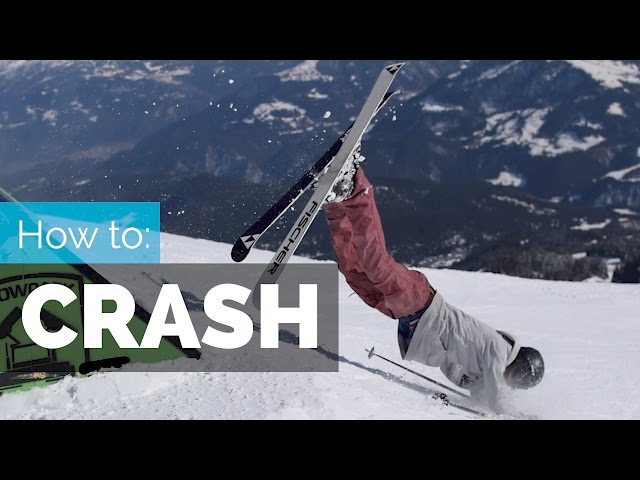
Source: Stomp It Tutorials · How To Crash on Skis | 4 Falling Techniques
Key tips
- Give in early. Fighting a fall to stay upright is how knees get torn
- Get low first so the drop is short, then slide out sideways
- Hands in loose fists in front of you, never straight out behind you
- Let the poles go rather than land on one
- Get your binding release value set by a shop, and leave it there
- Skis downhill of your body once you're down, edges in, then move out of blind spots