


Snow plough parallel
Once you feel like you’ve mastered your snowplough turns, it’s time to learn your snowplough parallel. This is also known as a stem or stem christie turn, snowplough steering or wedge to parallel progression
Source: Ski Instructor Academy | SIA Austria · Anwärter Ski Demo Runs - How To Pass Plough Steering (Parallel), Austria
Why learn this?
-
It’s the perfect way to explore more terrain
-
It’s more energy efficient so you can ski for longer with less fatigue
Simply put, what is it?
- Plough parallel is essentially using a slightly smaller snowplough when you are making a turn and keeping your skis parallel and hip width apart when you are skiing across the hill
Useful terms
Downhill ski = ski closest to the bottom of the slope Uphill ski = ski closest to the top of the slope
Fall line = the most direct path downhill/your skis point down the hill/the path a ball would take if rolled down the nountain
Traverse = the act of skiing diagonally across a slope (sideways and down) rather than straight down the fall line * Alpine basic position *= your ankles knees and hips are lightly bent, skis hip width apart, skis are on their edges, you have a little more weight on your downhill
Setting yourself up for success
- You should only move on to plough parallel when you are feeling confident with snowplough turns on varied terrain, wide green and easy blues, even some narrower slopes
-
Revise your snowplough turns, it is important to have the right movements happening at the right time, it will mostly stay the same for snowplough parallel turns
-
Start on a slope you feel very comfortable on
- Practise completing your turns fully, this means steering your skis totally straight across the hill after a turn, your ski tips want to be pointing directly across the hill in between your turns, if they are point a little bit towards the bottom the mountain you will find you pick up a little bit of speed and will make what you're learning now unnecessarily difficult
- As always, make sure your boots are snug and you are maintaining contact with the tongue and your shin
Here's a video showing what you are aiming for:
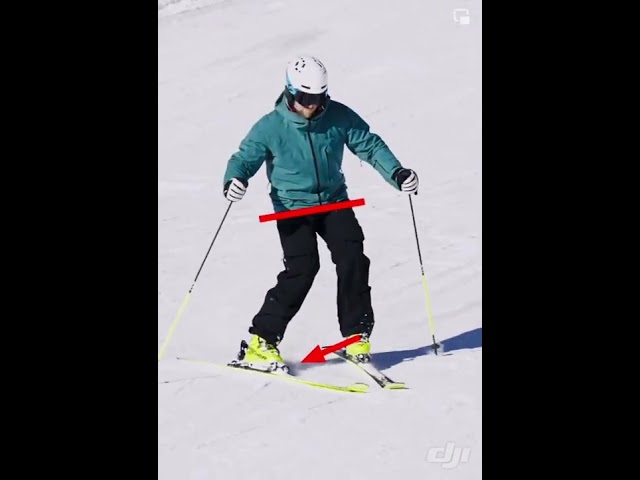
Source: International Pro Ski Instructors Association ISA · Steered Snowplough Turn - Pro skier Patrick Bätz
Getting started
• Practise your snowplough turns with a slightly smaller wedge/snowplough, using only a big wedge when coming to a total stop
• Practise standing still, stand in the alpine basic position with parallel skis and push your uphill ski into a snowplough by moving up and forward
• Practise pushing yourself across the slope (traverse) with your poles, you should be in the alpine basic position with more weight on your downhill ski to get grip as you traverse the slope
• Now practise this again but pushing your uphill ski into a wedge position so you form a snowplough at the end of your traverse
Body movements
As you make your snowplough at the end of the traverse your body is coming up and forward (see the red arrows in the demonstration video)
Using Garlands
https://skierlab.com/wp-content/uploads/2020/10/fan-progression-transparent-1536x864.png
Simply put, A garland in skiing is a partial-turn exercise where a skier traverses across a slope, steers slightly down toward the fall line (the path a rolling ball would take), and then curves back up toward the side of the hill without completing a full turn
• Start in a snowplough pointing slightly down the hill, keep your weight on downhill ski to simulate the end of a turn
• Bring your uphill ski inwards to match so that both skis are parallel across the slope
• Repeat this by pointing your skis more and more down the hill each time
Putting it all together
Now it is time to try a full turn:
• Start in a traverse as practised before
• Come up and forward to a neutral position (see the red arrows in the video) with weight over both feet and push your uphill ski into a snowplough/wedge position
Here you can see the up and forward movement in the arrows and clearly see the movement you are trying to replicate
Source: International Pro Ski Instructors Association ISA · Steered Snowplough Turn - Pro skier Patrick Bätz
• Lightly weight (increase the pressure) your turning ski and your ski tips will drift into the fall line (point down the hill) much like your snowplough turn, hold your weight here until your skis are pointing back across the hill
• As you have turned, your turning ski has become your downhill ski, your other ski should have far less weight on it
• It is here that you bring that uphill ski to match your downhill ski, making your skis parallel
TIP Start by trying one turn then stopping fully before trying a turn in the other direction Once this feels comfortable, start linking your turns
Trouble shooting - As you are traversing the slope, your weight should be slightly more on your downhill ski and balanced on your edges so you have grip as you go straight across
-
Come up and forward to transfer your weight to your turning ski
-
If you do not come up and forward it will be hard to turn as your weight will be too evenly spread over both feet
-
You should always finish your turn with your weight on your downhill ski, this will enable you to have grip and bring in your uphill ski to match in parallel
Great video for fixing any problems you might be having:
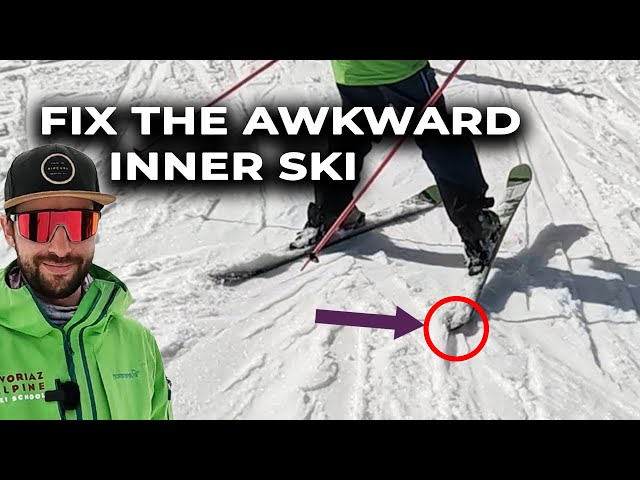
Source: Alpine Tutorials with George · From Snowplough to Parallel Skiing - How to Fix the Awkward Inner Ski