Backside Disaster
Source: GoGo Skateboarding
- Skill:
- revert into fakie rock position on transition
- Switch:
- Can be ridden switch
- Prerequisites:
-
Welcome to skateboarding!Picking a skateboardRegular or goofyPushingFoot brakingCarving (Turn by leaning)Tic TacsKickturnPowerslideSkatepark etiquetteDropping InTail stallPumping, Kickturn on transition, Rock to fakie
Backside Disaster
A backside disaster is a transition trick where you approach the coping, revert the board over it 180 degress backside (landing in a fakie rock position) and then bring the back wheels back over the coping and into the ramp.
Before you try it
You should already be comfortable with:
Backside kickturns — you need to be comfortable turning backside on transition.
Backside Revert - Howhow to initiate the trick once past the trasition
Fakie Rock — helps you understand getting the back wheels over the coping and bringing it back in.
Rolling in — you need to be comfortable committing your weight into the transition with the back wheels rolling over the coping.
How to do it
-
Approach the coping with controlled speed in your normal stance. Keep your knees bent, stay centred over the board. Keep your shoulders ready to rotate backside with the board.
-
As you ride up the transition, perfrom a revert to get the back wheels over the coping, rotating your shoulders backside. Get the back wheels over the deck of the ramp with the middle of the board touching the coping.
-
As soon as you've landed the disaster, look back into the transition and lean forward to bring the board back over the coping.
Learn more here!
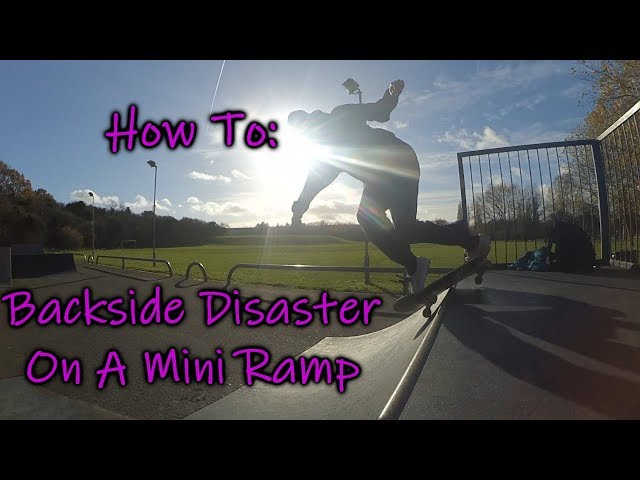
Video by GoGo Skateboarding
Common mistakes
Not rotating enough backside — The board gets over the coping but your body stays facing the ramp. Start the rotation with your shoulders and let your hips and board follow.
Turning too early — If you rotate before you've reached the coping, you can lose your line and miss the deck. Ride up the transition first, then initiate the backside rotation.
Hesitating on the re-entry — Once you've landed on the deck, don't stay there. Look into the transition, commit your weight back over the coping and let the board drop back in.
How to know you've got it
A clean backside disaster should feel like one continuous movement: controlled approach, backside revert and rotation, solid board contact on the deck, then an immediate commitment back into the transition. You should be able to repeat it without touching a foot down or having to stop on the deck.