Kickflip
- Prerequisites:
- Ollie, Pop Shuvit (shove-it)
What this trick is
A kickflip is where the board rotates one full turn along its long axis (frontside) beneath you while you jump, then you catch it with your feet and land riding away. It’s primarily a flatground trick, but once you have it consistent, you can take it to curbs, stairs, gaps and other street spots. You can also do it in and out of tricks on transition!
Before you try it
You should be comfortable with:
Ollies — you need enough pop and control to get both feet clear of the board.
Riding and stopping comfortably — you don't want to be thinking about balance while learning the flip.
Pop shuvits — can help you get comfortable with the board rotating beneath you.
How to do it
The setup — Start with a comfortable amount of rolling speed. Foot position varies from skater to skater but as a starting point put your back foot on the tail as you would for an ollie. Place your front foot just behind the front bolts, at a slight angle. Keep your shoulders roughly parallel with the board and stay centred over it.
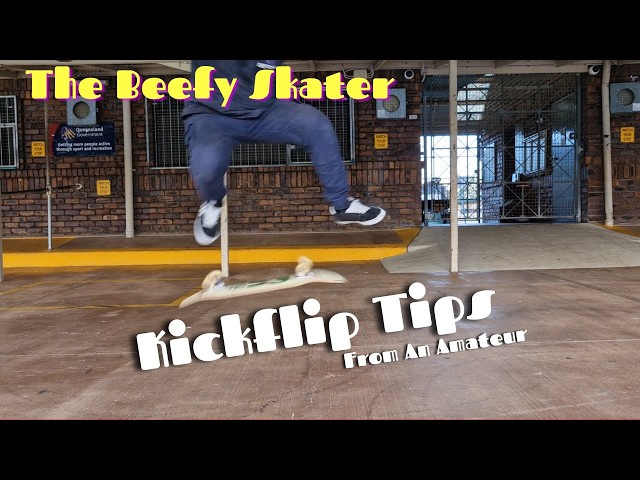
The trick — Pop the tail down and jump just like an ollie. As your front foot comes up, slide it toward the nose, but instead of simply sliding straight forward, let the front edge of your shoe flick up and off the corner of the nose. Think slide, then flick. Keep your back foot lifted so the board has room to rotate underneath you. The board should flip from the flick of your front foot rather than being kicked aggressively sideways.
The landing — Keep your eyes on the board as it rotates. Once you see the grip tape come back around, bring both feet back over the bolts and catch the board. Absorb the landing with your knees and keep your shoulders over the board so you can roll away rather than stepping off.
Learn more here!
Common mistakes
-
Trying Kickflips too soon. This is an advanced trick, you ideally should be confident in knee height ollies before attempting.
-
Kicking Down - Aim your flick where the board is going to be as the nose comes up (around knee height), not where it is when you start your pop!
-
The board shoots away from you — You're probably flicking too far forward or opening your shoulders. Keep your upper body centred over the board and think about flicking up and out rather than kicking the board away.
-
The board flips halfway or not at all — Your flick is probably too weak or you're stopping your front foot before it reaches the nose. Get your front foot up and through the ollie motion, then flick the ankle off the corner.
-
You land with only your front foot — You're likely leaving your back foot behind. Jump with both feet and actively lift your back knee; don't try to catch the board with the front foot alone.
-
You can flip it but can't land it — Practice catching the board with your front foot first, then work toward catching it with both feet. The goal is to stay above the board rather than jumping away from it.
How to know you've got it
You've got a kickflip when you can pop, flip, catch and land with both feet over the bolts, then roll away without needing to run out or put a foot down. Before ticking it off, aim for several clean kickflips in a row from normal rolling speed.