Pumping
- Skill:
- generate speed on transition without pushing
- Prerequisites:
- Introduction, Picking a skateboard, Regular or goofy, Pushing, Foot braking, Carving, Riding fakie, Skatepark etiquette
Pumping is how you generate speed in a mini ramp or halfpipe without pushing. It uses the 'transition' section of the ramp to gain a speed boost as the board moves from a vertical to horizontal position. It's the backbone of all transition skating: controling speed, developing a better feel for the ramp, and a base for every trick that comes after.
Before you try it
-
Get comfortable rolling up and down a mini ramp or quarter pipe (pushing off from the flat bottom) without stalling or bailing.
-
Wear a helmet and pads whilst you get used to the ramp.
How to do it
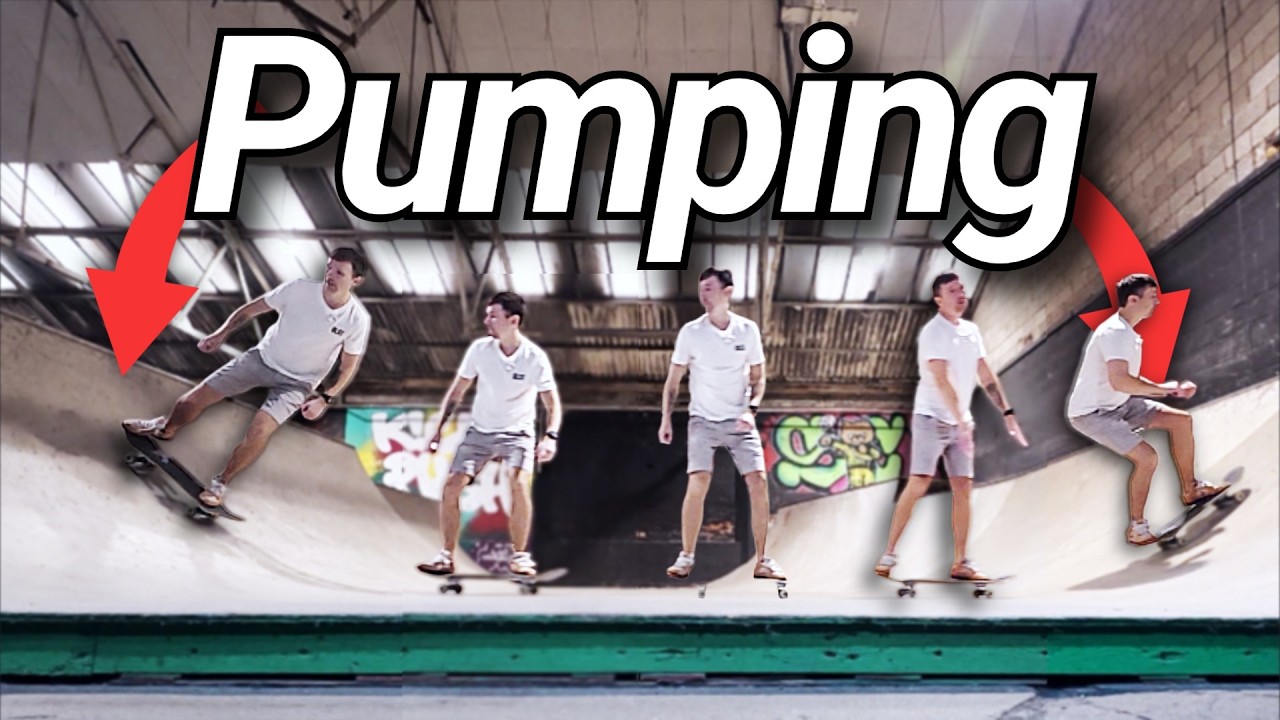
The speed comes from your legs, not your torso.
-
Start at the flat bottom of the mini ramp, facing towards the transition. Push off with your foot hard enough that you are easily past the transition (the curve at the bottom) and all wheels are in the upwards section of the ramp. Try to allow your knees to come up towards your torso as the board gets higher up the ramp.
-
On the way down fakie, as you come back fakie, straighten your legs (focusing more on the front leg). Use the power from your bent knee to press the front of the board down through the curve as it travels backwards. This is where the real speed boost comes from.
-
On the way up fakie. Take your weight off the board by allowing your knees to bend as it travels back up through the transition.
-
On the way down regular. This time push more with your back leg, to help straighten the board as you travel forwards back down through the transition
-
On the way up regular take your weight off the board, again by allowing your knees to bend up towards your torso, ready to straighten and push on the way back down again!
Helpful tips
Your torso stays roughly level. It's the board and your legs doing the work.
Take the weight off on the way up and then push on the way down the transition.
Think of bouncing a basketball. You push it on the way down and then your hand is weightless as it meets and follows the ball on the way back up.
Please note (as with all tricks) there are slight nuances and weight shifts that come with repetition and feel and will become unique to you. This guide is to give you an overall understanding of how It's all about rhythm, feel, balance and it comes with practice!
Watch more here:
Video by Man Vs Board
Common mistakes
- Bobbing the upper body. It looks like pumping but gives no speed. If your shoulders are going up and down more than your knees, you're doing it wrong.
- Pushing with both legs equally. You'll lose the line through the curve. Weight the back leg into the transition, the front leg out.
- Staying heavy on the way up. That kills your speed. Unweight going up, push going down.