Dropping In
- Skill:
- Drop into a quarter pipe, half pipe or mini ramp
- Prerequisites:
- Introduction, Picking a skateboard, Regular or goofy, Pushing, Foot braking, Skatepark etiquette, Pumping, Kickturn on transition
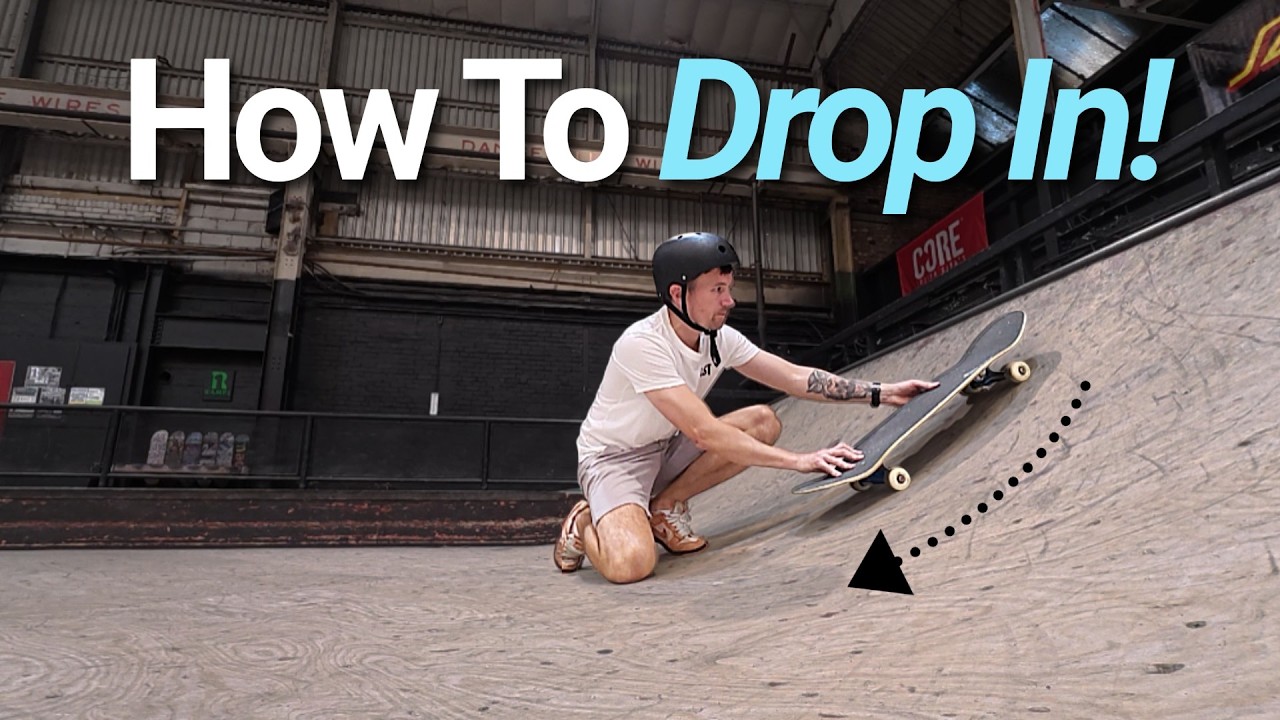
"Dropping in" is the term used when entering a ramp from stationary (usually a quarter-pipe or half-pipe) from the top deck. Although it is one of the easiest things to do on a skateboard it can be one of the scariest to learn! The main danger is falling backwards by underestimating the speed increase through the bottom section of the ramp (the transition) where the board changes from a vertical position to horizontal.
Before you try it
- Wear a helmet. (Elbow pads, knee pads and wrist guards are a good idea too)
- Pick a small, mellow quarter pipe with plenty of runoff.
How to do it
-

Put your tail of board on the deck of the ramp with the back wheels overhanging the coping.
-
Place your back foot on the tail of the board with the heel slightly overhanging, keeping you in contact with the deck of the ramp.
-
Lift your front foot and place over the front bolts.
-
Lean forward to initiate drop in. Aim to get your head over the nose of the board and look down.
-
As you tip into the ramp, keep leaning forwards and looking down!
-
Stay leaning forwards as you step your front foot down to help the front wheels meet the ramp - this should feel quite natural (the same way that your front foot automatically steps forward if you fall from standing)
-
As the board picks up speed through the transition, hold that forward lean.
-
Don't stop too soon! The drop in is only finished when you are rolling flat on the bottom, well past the ramp.
Helpful tips!
-
Ask a friend or another skater to hold your hand for the first few attempts to get a feel for the ramp.
-
Practice the 'fall forwards' without the board. Lean sideways from standing (as if you were on a board) and feel how your front foot automatically steps to catch you.
Common mistakes
- Not leaning forward far enough - Aim to get your head over the nose
- Stopping the forward lean too soon. This results in slipping out as the board accelerates ahead of you (even after the transition)
- Hesitating or backing out once the board starts to move. Commit fully, or step off before you start.
Learn more here:
Video by Man Vs Board