
The pike push-up is the main stepping stone toward a handstand push-up, and therefore toward every freestanding-handstand skill. You start in a push-up position on your toes, then walk your feet in toward your hands until your hips pike up high and your body forms a sharp inverted V. From that bent-over position, you lower your head to the floor and press back up.
Because a larger share of your bodyweight is over the shoulders in this position, pike push-ups demand serious overhead pressing strength. Treat it as the bridge between "I can press a little" (kneeling pike push-up) and "I can handstand push-up" (full HSPU). It's where you actually start to feel overhead strength stacking up.
How to do it
Start in a high plank. Walk your feet toward your hands until your hips are stacked almost directly over your shoulders and your body is in a tight inverted V. Keep your legs as straight as possible. Bend your elbows to lower the top of your head toward the floor between your hands, then press back up.
Some helpful tips here:
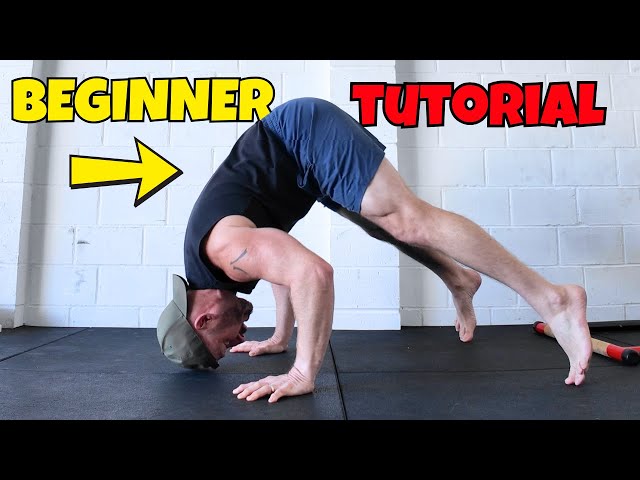
Source: Paul Twyman · PIKE PUSH UP Tutorial for the Complete Beginner
Target
- Sets: 3
- Reps: 10
- Rest: 90 seconds between sets
- Advance when: 3×10 with head lightly touching the floor
Key tips
- The closer your feet are to your hands, the harder it gets
- Lower your head between your hands, not in front of them
- Keep your legs as straight as possible. Bending hides the load
- Elbows track at roughly 45°, flaring slightly back in line with your torso